Your paid search campaigns are live. Social ads are running. Leads are coming in. Admissions is following up.
Yet the next class start is still behind target.
For postsecondary and career schools, the immediate reaction is often to increase spending or ask for more leads. Sometimes that is the right move. But not always.
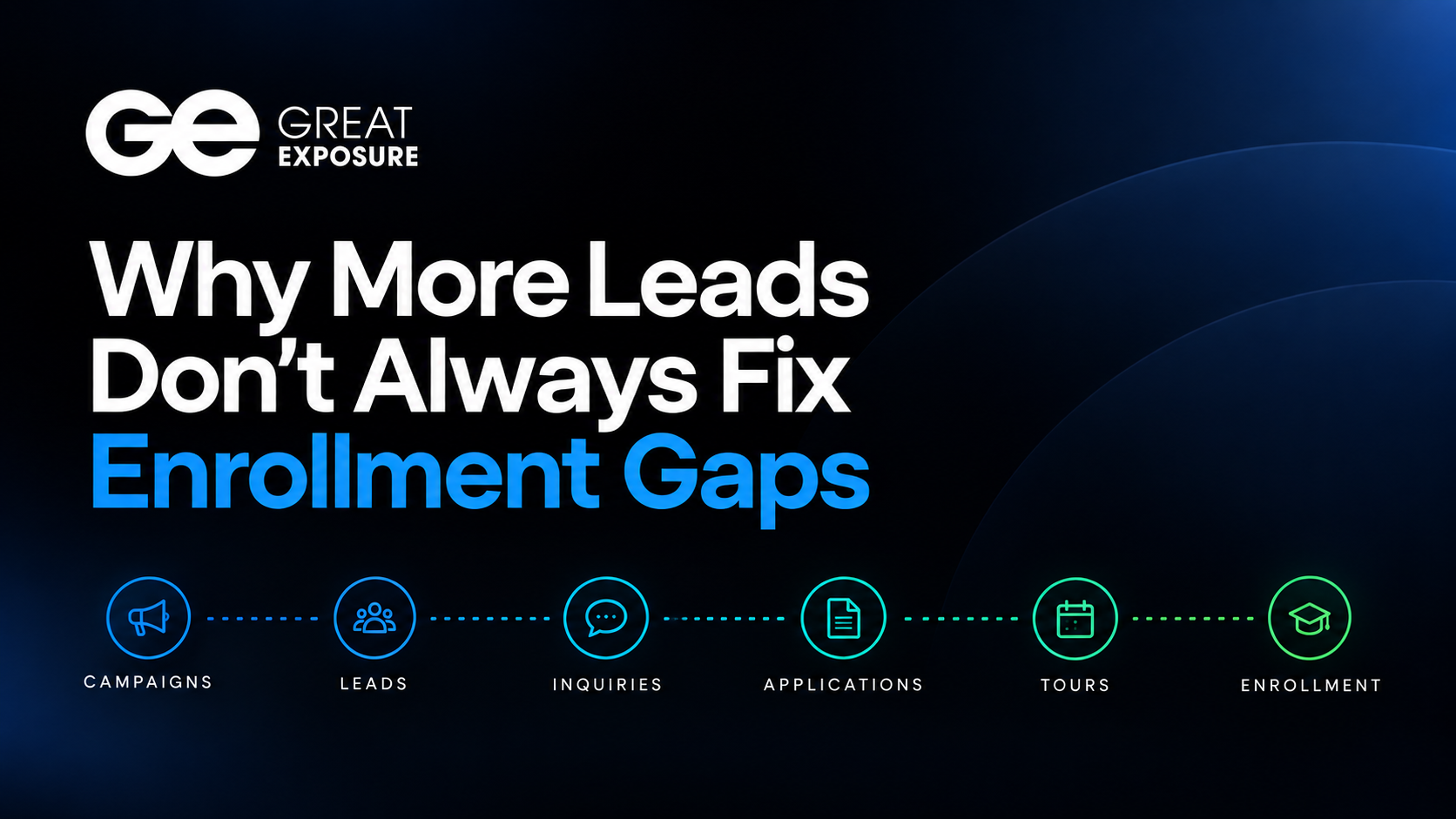
A school can have active marketing across several channels and still miss enrollment goals if the recruitment system is not connected from the first click through enrollment. Campaign activity alone does not create students.
Before increasing budget, ask a more useful question: Which marketing efforts are helping fill the programs, campuses, and class starts that matter most?
If that answer is unclear, additional spend may simply make an existing problem more expensive.
Lead volume is not enrollment contribution
A campaign can generate many inquiries at a low cost. Another may produce fewer leads but more applicants, tours, appointments, and enrolled students.
If both campaigns are judged only by cost per lead, budget can easily move toward the source that looks cheaper rather than the one contributing more to enrollment.
For example, paid social may generate a high volume of low-cost inquiries, while paid search produces fewer leads at a higher CPL. If search consistently drives more applicants and enrolled students for an upcoming start, it may be the more valuable investment.
The goal is not to identify one universally “best” channel. Paid search, paid social, pay-per-lead programs, education portals, organic search, and referral traffic can all play different roles in recruitment.
The important question is whether the school can see what happens after each inquiry enters the admissions process.
A low-cost lead source is not necessarily efficient if its leads rarely become applicants. A higher-CPL campaign may be more valuable if it consistently produces enrolled students in priority programs or locations.
Find the actual enrollment gap
Before changing a campaign or increasing spend, start with the enrollment need.
Which programs are behind target? Which campuses need more demand? Which class starts are at risk? Are there specific geographies, audiences, or program formats that are underperforming?
Once that gap is clear, schools can identify where the recruitment system needs attention.
Are enough qualified prospects entering the funnel for priority programs and starts? If not, the school may need more reach, better geographic targeting, a new audience, a stronger offer, or additional media investment.
Are current lead sources producing applicants and students, not just inquiries? If certain channels generate volume but rarely create meaningful admissions activity, the issue may be targeting, messaging, offer strategy, or channel mix.
Does the website help prospective students take the next step? Slow pages, unclear program information, weak mobile experiences, or poor alignment between an ad and its landing page can reduce conversion before admissions ever receives the lead.
What happens after admissions receives the inquiry? Follow-up speed, contact rates, communication, appointment scheduling, and the overall admissions process can all affect whether an inquiry becomes an applicant.
Can the school connect media spend to enrollment outcomes? If not, the first priority may be measurement rather than more budget.
These are different problems, and they require different responses. “We need more leads” should be a conclusion reached after diagnosis, not the starting assumption.
Is your website helping recruitment?
Marketing performance does not end when a prospective student clicks an ad.
After the click, the website needs to answer practical questions: What is this program? Is it available near me? Is it online, on campus, or hybrid? When is the next start? What career path does it support? How do I request information?
A prospect who clicks an ad for a medical assisting program should not have to search through a broad program directory, guess whether the program is offered at a nearby campus, or navigate several pages to find a request-information form.
When the landing experience is slow, generic, difficult to use on mobile, or disconnected from the campaign message, paid media is being asked to compensate for a website problem.
That gets expensive quickly.
For postsecondary and career schools, the website is part of the recruitment process. It should make programs easy to explore, clearly communicate availability and outcomes, and provide a straightforward path to request information.
Recruitment-focused website design is not separate from marketing performance. It affects whether media investment becomes a meaningful enrollment opportunity.
Connect media sources to enrollment outcomes
Advertising platforms can report impressions, clicks, conversions, and cost per lead. Those metrics are useful, but they do not tell the complete enrollment story.
Schools also need to understand what happens once an inquiry enters the admissions process.
Did the lead become an applicant? Did the prospective student schedule a tour, appointment, or call? Did they enroll? Which programs, geographies, and media sources consistently move students forward?
Looking at lead-to-applicant conversion, cost per applicant, cost per enrolled student, and performance by program or campus gives schools a more useful view of marketing effectiveness.
CampusLogin helps Great Exposure clients connect media sources and lead activity to the admissions process, including reporting across stages such as lead, applicant, tour, and enrolled student.
That visibility changes the budget conversation. Instead of asking only which campaign generated the most leads, schools can ask which sources are helping fill the classes that matter most.
Increase budget only after diagnosis
Increasing budget can be the right decision when the issue is insufficient qualified demand.
If a campaign’s leads are converting well into applicants and enrolled students, but volume is too low for a priority program, campus, or upcoming start, expanding reach may be the right move.
But if inquiries are coming in and few become applicants, additional spend may not solve the problem. The issue could be lead quality, targeting, website conversion, admissions follow-up, or the ability to measure outcomes.
Running more campaigns can create more activity. It does not automatically create more students.
Great Exposure works specifically with postsecondary and career schools across student lead generation, managed digital advertising, recruitment-focused website design, and CampusLogin technology.
Before increasing your marketing budget, find out what your current budget is actually producing.
If your campaigns are active but priority programs or upcoming classes are still behind target, Great Exposure can help identify where the recruitment gap is and what to address next.